
Is morality merely a contract between humans, or is it a truth that transcends personal opinions and preferences? Can moral principles change depending on everyone’s circumstances? What defines a moral act versus an immoral one? Is it what the majority agrees upon? Or what satisfies a select group of people? Can we say that a society’s culture determines its moral standards?
If morality is dependent on culture and social conventions, then there can be no fixed criteria for distinguishing right from wrong. In such a case, what is considered acceptable in one society might be condemned in another. A behavior regarded as immoral at one point in time may later be seen as moral, simply due to shifts in cultural attitudes and perspectives. But can we truly trust such a morality? Beyond that, does it seem reasonable for individuals to shape their sense of ethics based solely on the dominant trends of society? If that were the case, we would need to hire special agents to survey every individual’s opinion on moral dilemmas, compile the results, and publish updated guidelines weekly, monthly, or annually—because people’s views are constantly evolving due to countless factors over time.
Refer to your heart.
We are all in search of stability and certainty. We don’t want to rely on values that shift with time and place, changing in meaning and credibility.
Justice, honesty, forgiveness, loyalty—these are universal values. Although their manifestations may vary across different societies, their essence is cherished by all human beings. This points to an innate moral compass within every human—a basic awareness of good and evil.
We don’t need to study dictionaries to be drawn to moral values. Children don’t need to be taught that kindness is good, and bullying is bad. Yet, this innate recognition requires guidance. The spiritual heart—our natural disposition—can illuminate the path, but if a person reduces their existence to the material realm alone, this inner light can be dimmed by the dust of neglect.
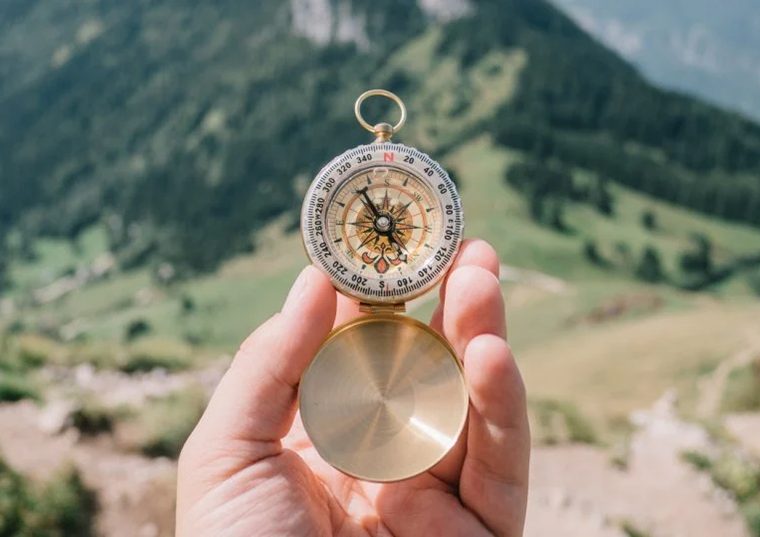
Thus, morality is the path of becoming and remaining truly human—not just a set of rules. And without a reliable source, this path becomes lost. Just as travelers crossing a desert need a compass, so too does the human being—journeying toward eternity—need a guide; a guide whose map of direction aligns with the voice of the heart, not something imposed or constructed from scratch.
Do we need to search for such a guide? Has humanity, in the 21st century, really been left without one until now? Who, since the dawn of history, have been the true heralds of humanity and moral integrity? Certainly, many individuals have sincerely sought the betterment of their people. But which of them possessed the qualifications we just described? Which of them presented a unified vision of the human being and their journey—regardless of language, race, culture, or gender? Which of them offered a complete, tested guide—free from scientific and practical trial and error—rooted in a source beyond transient personal gains and losses, a guide that has illuminated the human path across all times and generations?
Surely, you already know the answer: The Divine Prophets (peace be upon them).
Surely, you already know the answer: The Divine Prophets (peace be upon them).