Skip links

Human before the world

The introduction to anthropology

Another Birth

There is a gap between man and humanity. Birth serves to bridge this gap. While a man emerges from his mother’s womb, humanity originates from the essence of man. A human being can truly perceive his essence only by transcending the barriers he sets as a human being. Just like the first birth, the second birth of a human also involves stages of development. Emerging from our mothers’ wombs, we gradually became familiar with a broader world because our world inside our mothers’ wombs was small and limited. Once we realized that our hands, feet, ears, and eyes demanded a broader world, we exerted all our efforts to emerge from that initial dwelling. Thus, we abandoned it and set out in search of a broader dwelling. Therefore, every birth necessitates two essential elements:

The first essential element is acknowledging that a broader world awaits us, and the second is recognizing that we should abandon the smaller world we inhabit. Just as we leave the warmth and comfort of our mothers’ wombs in the hope of a world where we can experience sights, sounds, and tastes, the birth of our humanity also depends on recognizing that there is a world far broader than our desires: as long as ensnared by his desires, a human being is like a soldier in the hands of Satan (the Devil). After all, egoism in the world began with Satan himself when he became arrogant and thought that nothing in the universe was superior to him. Therefore, a broader world would have also awaited him had he transcended his egoism.

Those who do not free themselves from mere existence as a man will remain strangers to true humanity, as there is no real gap between birth and death. Imagine our time in the womb, when we were being nourished through the umbilical cord from our mothers, when we died to the ways of life within the womb, and when we were born into the life of the world. The umbilical cords were cut, separating us from our mothers; this meant a new, more refined, and nourishing way of sustenance was now available—our mother’s milk. Only when we recognized our mouths and realized that we could use our mouths for drinking were we willing to leave the womb; Otherwise, detaching from the umbilical cord while hoping for nothing would have been impossible. We discovered our inner potentials based on our human existence—our hands, feet, eyes, and ears. This discovery marked the beginning of our birth. Without this realization, leaving it does not seem logical.

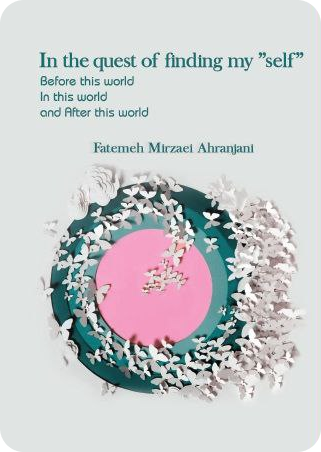
A human being experiences three realms. The first is the worldly realm in which we are born. The second is the dream realm, where we can travel to distant cities without enduring the fatigue of traversing time and space. The third is the intellectual realm, where we discover our true being. To realize the realms of imagination and intellect, we must first free ourselves from the worldly realm.

For an unborn baby, no matter how much we describe the stories of the world —its foods, adventures, and friendships—it brings no benefit. What makes an unborn baby eager to leave that confined space, i.e., the womb, is only the baby itself, because it discovers faculties that cannot manifest within the limited space of the womb. These faculties become active, leading to its birth. Similarly, another birth, like the first, requires personal experience.

Lesson 1

Hello! Today, we are going to talk about humans. Humans are complex and fascinating beings with great strengths and inherent weaknesses. But who are humans? Why were they created? And what destiny awaits them? Let's explore this topic together.

The Human Being: A Unique Creation

Humans were created from clay, yet within them lies a secret that sets them apart from all other creatures: the Divine Spirit. In the Holy Qur’an, Allah says:

فَإِذَا سَوَّيْتُهُ وَنَفَخْتُ فِيهِ مِن رُوحِي فَقَعُوا لَهُ سَاجِدِينَ (ص، 72)

So when I have proportioned him and breathed into him of My spirit, then fall down in prostration before him.’ (38:72)

Thus, when the Divine spirit was breathed into the human being, even the angels were commanded to prostrate before him.

The Human Being: A Creature Who Must Know Himself

The Holy Prophet Muhammad (ṣ) said:

«مَنْ عَرَفَ نَفْسَهُ فَقَدْ عَرَفَ رَبَّهُ»

"He who knows his self (nafs) would know his Lord."

This means that self-knowledge is the path to knowing Allah.

But how can we achieve this self-knowledge? To achieve it, we should reflect on life’s purpose, the power of free will, and our responsibilities.

The Human Being: Allah’s Vicegerent on Earth

Allah says in the Quran:

«إِنِّي جَاعِلٌ فِي الْأَرْضِ خَلِيفَةً» (البقره، 30)

"…Indeed I am going to set a vicegerent on the earth…." (2:30).

This indicates that human beings are Allah’s successors on earth. However, this vicegerency comes with responsibilities: cultivating the earth, recognizing the truth, and establishing justice.

Speeches by Fatemeh Mirzaei

Books

explore
drag