

Getting to Know Educational Pathway for Training Instructors in the International Department of the Hamgaman Institute

The College of Oswatun Hasana
It is He who sent to the unlettered [people] an apostle from among themselves, to recite to them His signs, to purify them, and to teach them the Book and wisdom, and earlier they had indeed been in manifest error. (The Qur’an: 62:2)
هُوَ الَّذِي بَعَثَ فِي الْأُمِّيِّينَ رَسُولًا مِنْهُمْ يَتْلُو عَلَيْهِمْ آيَاتِهِ وَيُزَكِّيهِمْ وَيُعَلِّمُهُمُ الْكِتَابَ وَالْحِكْمَةَ وَإِنْ كَانُوا مِنْ قَبْلُ لَفِي ضَلَالٍ مُبِينٍ [62–2]
The Educational Vision of the Oswatun Hasana School of Thought
Learning and education are crucial matters in human life, and people seek to find ways to develop and showcase these abilities through various methods, as humans possess inherent talents. However, from the perspective of this School of Thought, the only significant occurrence that should happen for a person is not the development of talent, because this School aims to achieve education and purification. The best example to illustrate our view on this subject matter is the work style of a gardener. Besides laying the groundwork for the growth of a seed, such as controlling the quality of water, soil, and light, the gardener stands by the plant, prunes it, removes pests, and monitors its development until it bears fruit. In other words, the gardener, in addition to teaching, stands beside the plant to ensure the effective application of its information in the growth process; a crucial point in the path of human education, in comparison to non-humans, in our school is that the environment is prepared so that a person, in any role—be it teacher, student, or manager—chooses, without imposition or coercion, to be on this journey despite hardships, and removes obstacles to his/her growth. This is the responsibility of learning. Ultimately, through its educational approach, this school of thought educates joyful, responsible, creative,updated, motivated.
On this page, we provide you with an introduction to the content of the College of the Oswatun Hasana School of Thought for a better understanding:

Familiarity with the Quran
Familiarity with the Qur’an is not merely a matter of memorizing and understanding its concepts. Rather, true familiarity with the Qur’an entails living with it in such a way that one’s heart is attuned to the words of the Qur’an in every moment of existence. Mere knowledge of the stories and verses of the Qur’an does not provide an accurate understanding of a monotheistic way of life. People engaged in epistemic pursuit do not only read the Qur’an; they recite it with their hearts. This means that they place themselves in the position of each character, comparing their own soul (Nafs) to those figures in order to discern truth from falsehood.…
For instance, they consider Hazrat Asiya (S.A.) as the example of Nafs al-Mutmainnah (the soul at peace) and Pharaoh as the example of Nafs al-Ammarah (the commanding soul). These individuals do not regard these figures as distant historical personalities, separate from their own lives; rather, they perceive them as mirrors, recognizing the potential for themselves to embody one of these roles.
Furthermore, they perceive contemporary Zionists and the American regime as the Pharaohs of today. They exercise caution in avoiding the traps of Pharaoh-like mentality and the dangers of becoming self-centered. They do not view Hazrat Asiya (S.A.) and Hazrat Maryam (S.A.) as women who are far removed from their own experiences, such that they cannot serve as role models. On the contrary, they recognize within themselves the same courage and chastity that these figures exemplified. The chastity of Hazrat Maryam (S.A.) is not understood solely in terms of her hijab and monasticism. Rather, they seek to uncover the deeper meanings of the verses, beyond their surface-level interpretations, and strive to cultivate chastity within themselves. This realization leads them to understand that chastity entails guarding the doors of their imagination, thoughts, and mind against Satan’s intrusion, and to act according to the guidance of the Imams (A.S.). The Imams (A.S.) embody the Qur’an, and thus, closeness to the Qur’an equates to closeness to the 14 Infallibles (A.S.).
An individual who seeks epistemic knowledge within the Oswatun Hasana School of Thought does not merely seek interpretations of the Qur’anic verses; their ultimate objective is to understand the truth of the Qur’an and to live according to it. To truly live with the Qur’an, one must comprehend the truth and way of life of the Imam (A.S.). The Oswatun Hasana School of Thought places particular emphasis on the two precious legacies of the Prophet of Islam (peace be upon him and his family). These two legacies guide the individual toward fulfilling the conditions of a monotheistic way of life, preparing the world for the reappearance of Imam Mahdi.

Epistemic Discussions
Upon comprehending the significance of human intellect and the stages of the soul, an individual gains insight into his origin and his ultimate destination. This awareness transforms his worldview, empowering him to navigate life’s challenges with greater strength and resilience. Furthermore, he can discern the correct path in alignment with his true essence and take deliberate steps toward it, as he is cognizant of his inner truth and fully aware of his responsibilities in every circumstance.…
For instance, in the lessons titled “Principles of Beliefs” and “Anthropology,” the nature of the human soul is examined in a general sense. Fundamental questions such as “Who am I?” and “What is the human position in the system of creation?” are explored. Additionally, the subject of Ontology delves into the existence and essence of all creatures, providing thoughtful consideration. In the lesson titled The Origin of Death, the nature of death is addressed, not as a mere cessation of being, but as a transformative change within the realm of human existence.
In The Originator of Existence, the life of Hazrat Fatima (S.A.) is presented as an exemplary model for all times, with a focus on elucidating the true position of women in the grand scheme of creation.
These lessons are structured in a manner that encourages the aspirant to internalize and live by their teachings, thus enabling her to understand her rightful place in the world, rather than merely retaining theoretical knowledge that holds no practical relevance to her life.

History
By studying and analyzing various historical events, such as wars, colonization, and the oppression of innocent individuals, many of which are now forgotten, we develop a more profound understanding of the world around us, including the political and geographical positioning of nations such as Iran.…
Through this reflective process, we come to recognize our role in the world and endeavor to comprehend our responsibilities as human beings, as outlined in the Holy Qur’an, Surah Hūd, Ayah 61:
هُوَ أَنْشَأَکمْ مِنَ اْلَأَرْضِ وَاسْتَعْمَرَکمْ فِیها
He brought you forth from the earth.
Moreover, we aspire to elevate our condition and contribute to the betterment of other nations through thoughtful explanation and the dissemination of truth.To realize this objective, we should listen to the voices of the innocent and the oppressed, amplify their cries on a global scale, and stand firmly against tyranny and colonialism, beginning with an internal commitment and extending outward into the broader world.
…
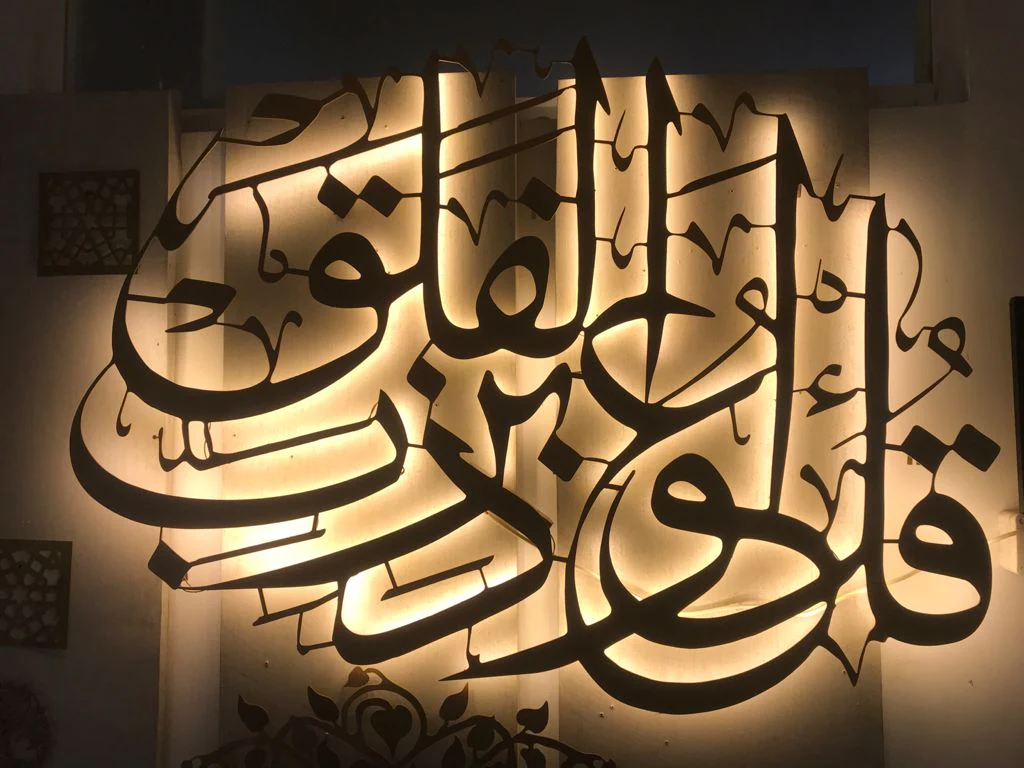
Arabic
To gain a deeper understanding of the Qur’an, it is essential to learn the Arabic language and incorporate it as a fundamental component of educational curricula. In the study of Arabic, particularly within the context of the Holy Qur’an, there are no exact synonyms. Although some words may share similar meanings, each possesses distinct characteristics and unique subtleties that differentiate it from the others. The language of the Qur’an is the language of our essence; it becomes all the more essential for us to learn this language to comprehend the divine message of Allah more profoundly.…
To engage in jihad (striving in the way of Allah) correctly, following the path of Wilayah (guardianship), one must not remain ignorant of the Arabic language, for it is the key to accurately understanding the verses of the Qur’an. As stated in the Qur’an, Surah Zokhrof, Ayah 3:
إِنَّا جَعَلْنَاهُ قُرْآنًا عَرَبِی َّا لَّعَلَّکُمْ تَعْقِلُون(زخرف آیه۳)
We have made it an Arabic Quran so that you may exercise your reason
Thus, the pursuit of intellectual and reflective growth necessitates an awareness of Arabic. Regrettably, many Muslims present various excuses for not learning this language, despite willingly dedicating substantial time and effort to acquiring other forms of knowledge, many of which may be even more challenging than Arabic.
A lack of familiarity with Arabic cannot serve as a justification for remaining estranged from the Qur’an. Therefore, it is essential to learn Arabic to deepen our understanding of the Divine words of Allah.

Research
In addition to acquiring knowledge in the foundational principles of research and investigation, aspirants gradually develop the skills necessary to engage in research in the verses of the Qur’an, narrations, and epistemological sources.
Research is not merely the act of searching through sources; rather, it is a systematic process in which collected information is analyzed and evaluated to enable a person to reach a correct and well-reasoned understanding and perspective.…
For instance, in the lesson entitled “Innate Spiritual Conduct,” reflection on the verses about the lives of Lady Maryam (S.A.), Prophet Zakariya (A.S.), and Prophet Yahya (A.S.) yields practical insights and concrete examples relevant to contemporary life challenges.
This method not only enhances the ability to derive conclusions from epistemological sources but also renders the research process dynamic and effective in generating practical and applicable solutions for real-world issues.

Persian Language
خَلَقَ الْإِنْسَانَ (۳) عَلَّمَهُ الْبَيَانَ (۴)
“He created man, (3) [and] taught him articulate speech. (4)” (the Qur’an: 55: 3–4)
Persian is now regarded as one of the most effective tools for acquiring Islamic teachings (maՙārif) and understanding the deep-rooted civilization of Islam. With its rich cultural heritage, this language can innovate across various disciplines while playing a crucial role in transmitting Islamic teachings to societies worldwide.
Furthermore, as the Islamic teachings and educational materials of the Institute are provided in Persian, acquiring proficiency in this language is an essential step for participants to achieve a thorough understanding of the books and audio content.…
Persian is now regarded as one of the most effective tools for acquiring Islamic teachings (maՙārif) and understanding the deep-rooted civilization of Islam. With its rich cultural heritage, this language can innovate across various disciplines while playing a crucial role in transmitting Islamic teachings to societies worldwide.
Furthermore, as the Islamic teachings and educational materials of the Institute are provided in Persian, acquiring proficiency in this language is an essential step for participants to achieve a thorough understanding of the books and audio content.
2. An Advanced Level
After completing the basic level, participants progress to the advanced level, concentrating on understanding specialized Islamic teachings of the Oswatun Hasana School of Thought through textual and audio resources. This phase includes academic reading sessions, such as Maՙrifat al-Nūr, Usūl al-ՙAqā’id, and other core texts, aimed at enhancing comprehension of the Islamic teachings presented by the Oswatun Hasana School of Thought.

The Operational Section: Introduction to the Monotheistic Lifestyle
One of the primary distinctions of this program compared to others is the direct experience of living according to the principles of the Oswatun Hasana School of Thought in an environment specifically designed for the participants. International communal living alongside individuals who have been nurtured in the Oswatun Hasana School of Thought for years introduces participants directly and tangibly to the principles, values, and lifestyle of the Oswatun Hasana School of Thought.…
This phase plays a crucial role in reinforcing the principles of the Oswatun Hasana School of Thought. This process gradually guides individuals toward refining and reshaping their habits and preferences, steering them toward a way of life centred on Wilāyah.
Furthermore, as the Islamic teachings and educational materials of the Institute are provided in Persian, acquiring proficiency in this language is an essential step for participants to achieve a thorough understanding of the books and audio content.

Modern Sciences
A core pillar of the Oswatun Hasana School of Thought is the mastery of contemporary sciences across various disciplines. This school of Thought, through shaping worldviews and conducting individual needs assessments, seeks to utilize all available tools to fulfill personal and collective objectives. Within this framework, individuals integrate their innate capabilities with external scientific resources, leveraging knowledge as a means to achieving their spiritual and intellectual goals.…
One of the most vital tools that participants should master is the Persian language, which provides a deeper understanding of Islamic teachings and thereby significantly enhances the effectiveness of their learning process.
Teaching method, life skills, multiple intelligence,(etc.).

The Explanation of the Oswatun Hasana School of Thought
This educational syllabus is designed as one of the fundamental and initial steps for aspirants to enter the Oswatun Hasana School of Thought. Its primary purpose is to provide a comprehensive introduction to the principles, perspectives, and worldview underlying the Oswatun Hasana School of Thought. This stage helps aspirants become acquainted with the intellectual and ideological foundations of the School of Thought and gain a profound understanding of its goals and frameworks. This part includes: In continuation, aspirants gain practical operational experience by participating in the activities of the Oswatun Hasana School of Thought. This stage includes: Ultimately, to conduct field observations, the aspirants visit institutions and organizations where the Oswatun Hasana School of Thought is implemented. These visits are intended for:
This syllabus is presented in two domains, the core and the system (shell), and is organized into four stages.
First stage: the core
This part includes: …
Second, third, and fourth stages: Familiarization with the School’s Systemic Part
In this part, the aspirants enter the systemic part (shell) of the Oswatun Hasana School of Thought and become familiar with its operational components.